
1 min read
Comparison of PLSR and PCR Methods in Addressing Multicollinearity Issues
Case Study: The effects of education and inequality-poverty sectors on East Java's education index
PLSRPCRMulticollinearityR Studio
Features
Tech Stack
R Studio
Case Study: The effects of education and inequality-poverty sectors on East Java's education index
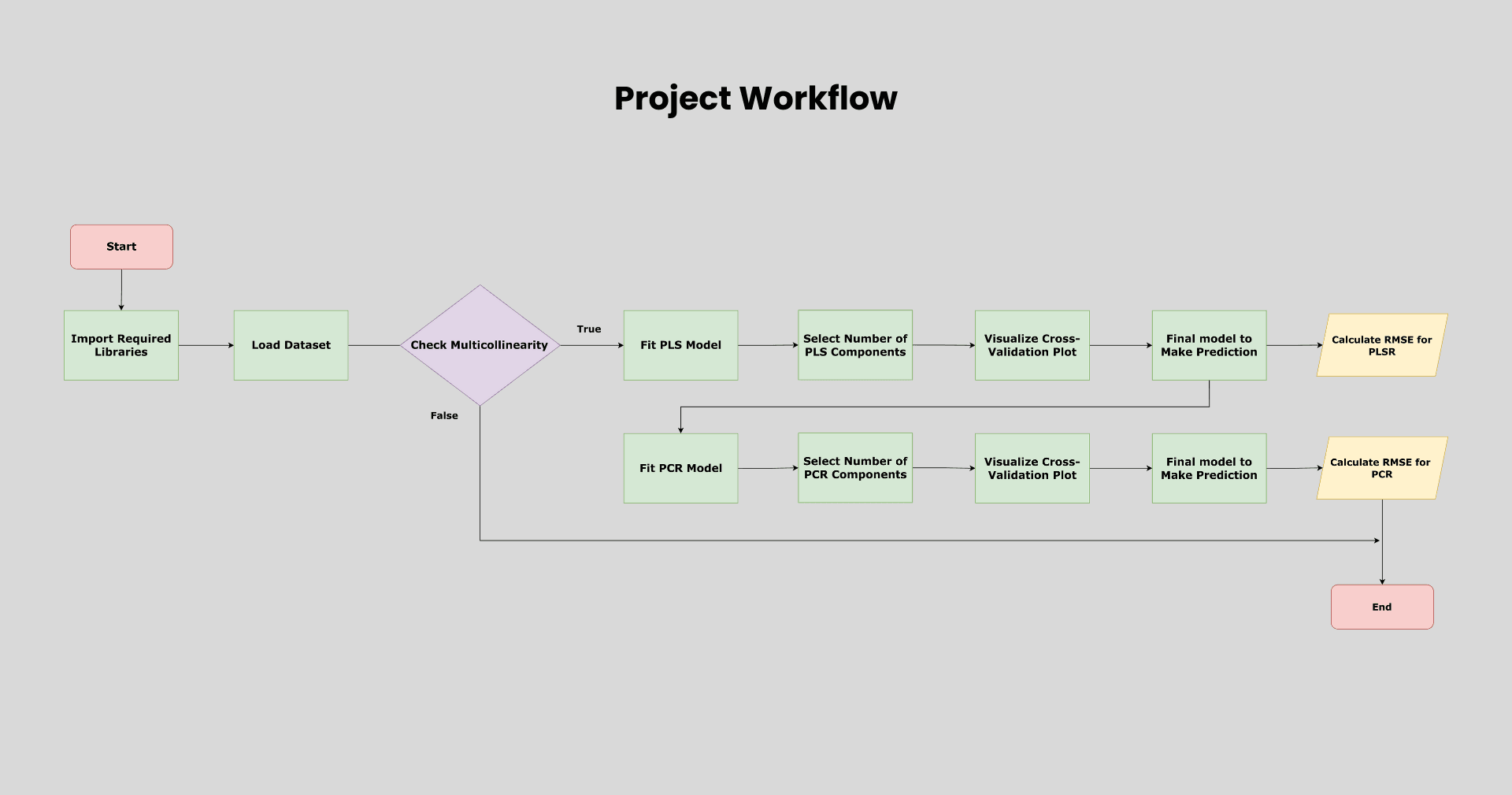
This project aims to compare the effectiveness of Partial Least Square Regression (PLSR) and Principal Component Regression (PCR) in addressing multicollinearity issues within a multiple linear regression framework. The study focuses on analyzing the influence of the education sector, inequality, and poverty indicators on the Education Index of East Java Province.
Multicollinearity, a condition where independent variables are highly correlated, can significantly distort regression estimates, making them unstable and unreliable. This study explores two modern regression techniques PLSR and PCR that are specifically designed to overcome such issues. PLSR is known for its robustness in handling multicollinearity even with small sample sizes and non-normal data distributions. Meanwhile, PCR reduces dimensionality by transforming correlated predictors into orthogonal principal components before regression.
By comparing the performance of PLSR and PCR in this real-world context, the research seeks to identify the most reliable method for modeling educational development in regions affected by complex socio-economic factors.